
Facility linen and resident personal laundry, both run to a standard.
Two different jobs, one department, and a par level that actually holds.
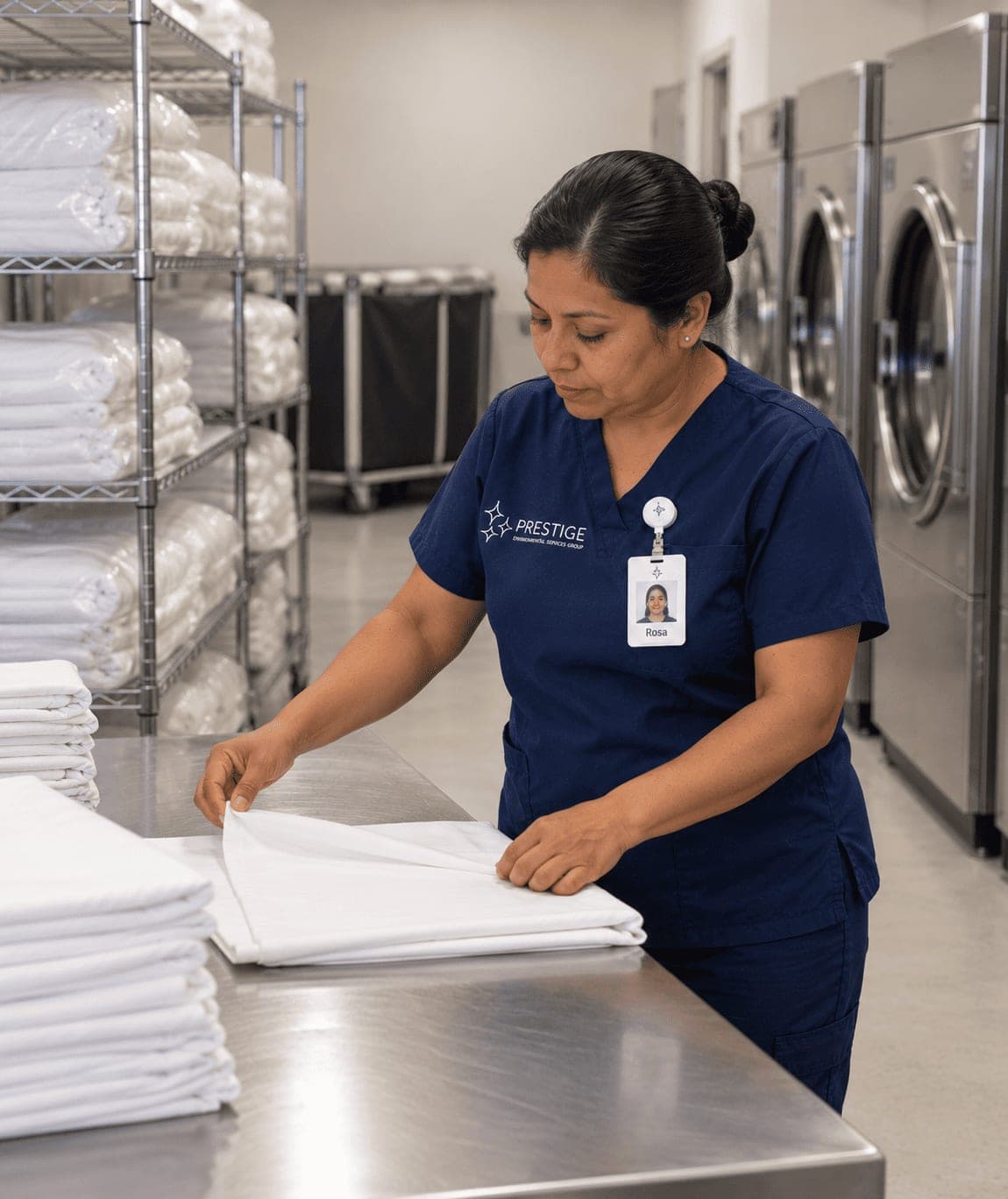
Two jobs, not one
Facility linen is a logistics problem. Personal laundry is a dignity problem.
Facility linen — sheets, fitted sheets, pillowcases, towels, gowns, blankets, pads and spreads — is a par-level system. It fails when linen sits in a closet on 3 West while the laundry runs short and the floor calls for an emergency delivery at 9 p.m.
Resident personal laundry is a different failure mode entirely. A resident's blouse goes missing and it is not a linen shortage, it is a grievance, a family phone call, and sometimes a complaint survey. Personal items are sorted, tracked, laundered separately, and returned to the right room.
We run both, and we do not let one subsidize the other.
Soiled linen handling
Soiled linen is handled as though it is infectious, because the standard treats it that way.
Under the federal requirements of participation for nursing facilities at 42 CFR 483.80(e), personnel must handle, store, process and transport linens so as to prevent the spread of infection. Where linen is contaminated with blood or other potentially infectious material, handling also falls under the OSHA bloodborne pathogens standard at 29 CFR 1910.1030, which governs how it is bagged, labeled and transported to protect the employee doing the handling.
- Soiled linen bagged at the point of use, not carried loose down a corridor
- Never held against the body
- Minimal agitation — soiled linen is not shaken out
- Separate soiled and clean carts, never interchanged
- Defined clean and soiled traffic flow through the department
- Clean linen stored covered and away from soiled holding
- PPE available and used at the point of handling
The wash process
Chemistry, temperature and time — measured, not poured by hand.
CDC guidance for environmental infection control in health-care facilities recognizes both hot-water washing and low-temperature washing, the low-temperature route depending on the correct chlorine concentration and cycle controls being used and monitored. Either route works. Neither works if someone is eyeballing a cup of chemical into a machine.
So the first thing we do on a new account is audit the dispensers. Installing proper dispensers, filters and parts removes manual pouring, removes over-usage, and removes the variability that makes a linen program unpredictable — and it usually pays for itself in chemical spend inside a quarter.
- Automatic chemical dispensing rather than manual pouring
- Cycle programming matched to the classification of the load
- Dispenser, filter and parts audit at startup and on a maintenance schedule
- Wash chemistry reviewed with the supplier, not left to whoever is on shift
Par levels and inventory
Linen goes missing in closets, not in the wash.
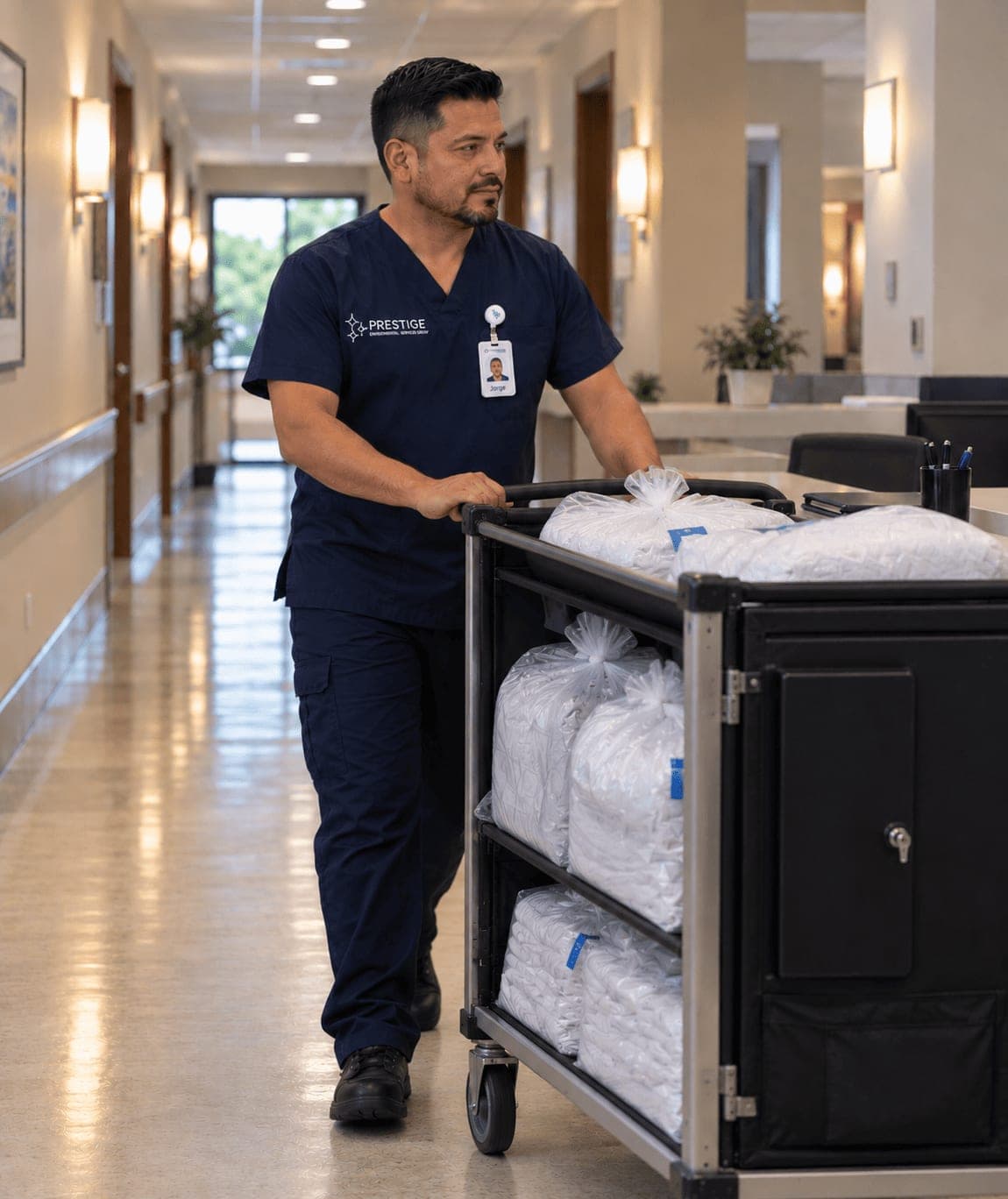
We run a delivery schedule by shift and by area, with a stated par for the 7–3, 3–11 and 11–7 shifts, and a signature from each shift confirming the delivery. Bagged sets, blankets, pads and fitted sheets are counted out and counted in.
Monthly, we inventory every linen category against par level: what is in the laundry, what is in the closets, what is on beds, what has been ragged out, what the total is, what par requires, and what needs to be ordered. Where linen is going short, the answer is almost always a floor holding stock rather than a supply problem — so we round with nursing to recover it rather than reordering into the same leak.
The result is a linen budget that is predictable and a floor that is not calling the laundry at night.
Equipment discipline
Lint traps are a fire risk, and we log every load.
A blocked lint screen is the most common preventable cause of a dryer fire and the most common cause of a dryer that takes two cycles to do one load. Our lint trap log runs by date and shift, with a time and an initial for every load cleaned. The laundry itself is cleaned down at the end of every shift and signed for.
It is a small discipline. It is also the kind of thing a life safety inspector notices immediately, in either direction.
- Par levels set by shift and by unit
- Delivery schedule signed off each shift
- Monthly inventory by item against par
- Rag-out discipline for linen past useful life
- Recovery rounds with nursing for hoarded linen
- Emergency linen stock held rather than improvised
Linen condition is a regulated item
You cannot wash your way out of threadbare.
For nursing facilities, the resident's right to a safe, clean, comfortable and homelike environment at 42 CFR 483.10(i) expressly includes clean bed and bath linens that are in good condition. State assisted living rules run to the same idea in their own wording: linens judged on condition rather than only cleanliness, and personal laundry services made available to residents who need them.
Neither standard is met by washing. Both are met by inventory discipline — knowing what you have, retiring what is finished, and replacing it before a surveyor finds it.
Start here
Tell us what your facility needs.
We walk the facility with your administrator, director of nursing or environmental services director, review the current scope, the linen position, the condition of the floors and the state of the documentation, and put the whole scope in writing.