
One standard across the portfolio. The right rule set in every state.
For operators running facilities in more than one market across the
Southeast, the problem is not finding a housekeeping contractor.
It is finding the same one twice.
The problem
Most portfolios are running a different housekeeping company in every market.
Each one has its own scope of work, its own idea of what a deep clean includes, its own forms, and its own definition of what gets reported. So corporate cannot compare two buildings, cannot see a problem before the administrator escalates it, and negotiates the same contract terms from scratch every time a building changes hands.
Meanwhile the requirements genuinely do differ. A skilled nursing facility answers to the federal requirements of participation; an assisted living community in the same portfolio answers to a state rule that may look nothing like the one two states over. Standardizing by ignoring that is not standardization, it is exposure.
How we run a portfolio
One template, adjusted per building rather than reinvented per building.
- One scope of work template, adjusted per building rather than reinvented per building
- The same documentation set in every facility — room-level records, pest log, linen inventory, floor care calendar, in-service records
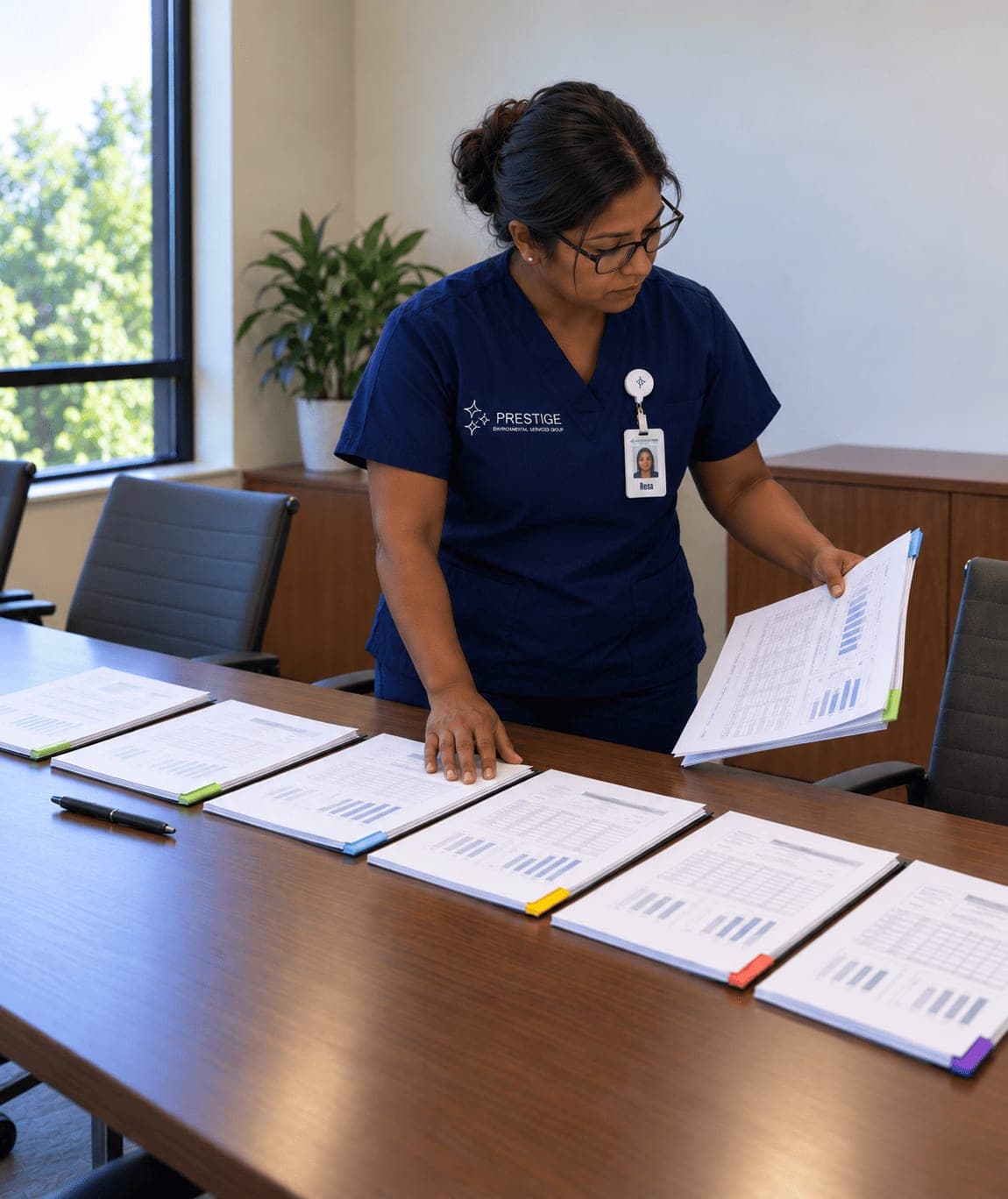
- The same monthly report format, so buildings are comparable to each other and to prior periods
- State rule sets tracked centrally, applied locally, and reviewed when they change
- Screening standards set to the higher of our standard and the state requirement
- A dedicated housekeeping manager in each facility, reporting through one regional structure
- One point of contact for the portfolio, and one contract to negotiate
- A mobilization sequence we have run before, so new buildings do not start from zero
What corporate actually gets
An outlier is visible in a month rather than after a survey.
Comparability. When every building reports the same way, an outlier is visible in a month rather than after a survey. Recurring findings across several buildings point to a training gap; a finding in one building points to a management gap. Those are different problems with different fixes, and you cannot tell them apart without a common format.
It also makes acquisitions easier. A building added to the portfolio gets the same department, the same records and the same reporting inside the transition window rather than after a year of stabilization.
Start here
Tell us what your facility needs.
We walk the facility with your administrator, director of nursing or environmental services director, review the current scope, the linen position, the condition of the floors and the state of the documentation, and put the whole scope in writing.